Tuesday, 8 April 2014

Tuesday 8th. April 2014

A visit to Sevenoaks Reserve this morning was mainly to see how the Treecreepers were getting on with their nesting . Arriving at the tree , I was devastated to find a large area of bark missing , exactly
where the nest entrance had been . On the ground , at the foot of the tree , was the missing piece of
bark . I have no idea what the cause was , but from the look of the bark , it was pretty rotten and could have come down in the wind , I just hope it wasn't someone after their eggs . Dismayed , after a quick look from Willow Hide and finding just Canada and Greylag Geese , I walked round towards Tyler Hide , finding the area directly in front almost devoid of birds apart from a few Lapwing . A scan over the islands wasn't much better , but it did produce my first of three migrant species , being a
Little Ringed Plover , looking minute against a Gull on one of the furthest islands from the hide . A scan of the sky produced the other two , a single Swallow and minimum of three Sand Martins , all hawking for insects over the far side of the East Lake . A look down the far end around Sutton Hide was non eventful , but on the way back , in the fenced off area where the goats were during the Winter , the descending call of a Willow Warbler made my fourth migrant . It could possibly have
been six , with several Blackcaps (male pictured) and Chiffchaffs in song on the way round . From the Reserve I moved onto the Downs , primarily to see if the Early Purple Orchids were in flower , having seen some on a Dungeness posting . I did find 25/30 rosettes of spotted leaves and three
flower spikes , but the best one will not be in flower until the weekend at the earliest . I had just found my first Adder , when a text from Carol telling me that the people had arrived to take down a large conifer in the neighbour's garden , but almost on the fenceline . They were going to give us warning so we could try and protect the plants in our border under the tree , and by the time I got home , only the main trunk remained . Fortunately , not too much damage was done to our border .
After lunch , I headed up to the Greensand Ridge , not an original intention . On the way to the
combat / mating area , I passed another male guarding , if you could call sitting on her neck guarding , a female . This could prove to be another area for action in the future . Within 5 metres of where the big black/white male mated the big female , I found the male again in mating mode with a
female , but I was pretty sure it wasn't the large one . To be sure , I went and found her , on her own , and looking very content . Back at the action , I watched the big male attempt to mate three times with the new female , and three times she refused . Once again , the mating attracted other males into
the area , and there were three 'spats' , I couldn't call them combat , as each only lasted a few seconds , the large male seeing each one off in turn . The third attempt to mate was well out in the
open , but once again the female was having none of it . Don't know what it is about this Spring , but it is certainly turning out to be an interesting one Adder-wise .
As I got home , I had my first Kent Speckled Wood , when one landed on the front window as I
walked down the path . Perhaps it was inspecting the paint job .

Sunday, 6 April 2014

Sunday 6th. April 2014

Well , after all the excitement of Friday , I would have liked to have spent some time up on the Greensand Ridge to see if there were any further developments , but visiting was on the cards and a late return home meant no time to post details of a 45 minute visit I managed to squeeze in before heading off .
The early coolness was starting to burn off as I arrived , and I headed straight to the area of Friday's combat , unsure of what I would find . Disappointingly , it turned out to be an area , totally devoid of any Adders . Moving on , I found several males , all in breeding colours , moving quickly around , tongues continuously flicking , no doubt trying to lock onto the scent of a female , and taking very little notice of each other when they came into contact . At one point I found a female surrounded by a triangle of three males , all watching and waiting . Another female , quite close , had no such attention , probably because female Adders only come into breeding condition every other year , so she most probably bred last year , and would not be giving off the scent that the testosterone charged males were searching for . A couple of non-breeding males were enjoying the sun's warmth , and a pleasing find of a fifth juvenile , born last Autumn , was great . I probably spent as much time looking at my watch as the animals during the visit , but with time running out , I couldn't leave without one last look at the combat area , and on the edge of a mossy area I found the female and the
victor from the combat , but no cosy side by side posing this time , as the male was slowly moving over the female in slow , jerky movements that I can only describe like watching an old silent movie . Having witnessed this behaviour before , I knew exactly what was on his mind , but the same thing happened this time as it has in the past , the pair wanted some privacy , and moved into the surrounding vegetation . Through a small gap , I could see the pair writhing around , their tails whipping around searching for the other's . The reproductive organs of Adders are almost at the tail in both sexes , so marrying the two organs together proves somewhat difficult . After a short while , what I have described in the past as being a carousel ride began , where both animals spin around like
a top , which probably helps them line up their bodies . Eventually the carousel slowed down , and
the only movement was their two tails flicking about , then the first sighting that they had joined . Another look at the watch , and out of the corner of my eye , I see another good sized male just two metres away , avidly scenting the air as he closed in on the pair . I watched his approach , not
knowing how this would turn out , especially regarding the large mating male , but he took no notice at all , and the visitor , having had a good close up look as to what was going on , slithered away into the vegetation and wasn't seen again . With the place to themselves , their movements slowly brought
their bodies , well that of the male anyway , more out into the open , and the mating was confirmed . With that , I left them to it and hot-footed it back to the car , thinking along the way that if they are successful and produce young in the Autumn , their offspring should be a bit easier to find , assuming they take after the parents .
Now it's down to processing the photos , no hardship today as it's already raining .

Friday, 4 April 2014

Friday 4th. April 2014

Have spent the week mainly painting the outside of the house , but , every now and again , getting away to do a quick visit .
Just such a time , was the bird survey at Down House , which produced a better than average 24 species , with the only possible migrant being a single singing Chiffchaff in the Sandwalk Woods . The most pleasing find was a pair of Pied Wagtails , busily removing any insects that could trouble the batsman or bowler on the cricket square . They usually breed around the pavilion , but I failed to record them at all last year , so good to see a pair back . Also in the Sandwalk Woods , lots of
Toothwort / Lathraea squamaria , a parasitic plant on the roots of it's host , seemingly , like many plants this year , earlier than usual . On the way home , a stop on the Common , found a female
Brimstone , along with several males . She later landed on a Buckthorn bush and appear to lay an egg , but on searching , she was just kidding .
In good conditions , a couple of trips up onto the Greensand Ridge , found Adder numbers rising slowly , with good numbers of females emerging , and yet another juvenile , born last Autumn being
found . I was determined to finish the painting today , and got started in cool , grey conditions . So it stayed for the morning , but towards lunchtime , a few sunny spells opened up . They got the brush working quicker , and soon it was done , my gear grabbed , and off to the Greensand Ridge . As I arrived , the cloud could be seen rolling in , but it was still pleasantly warm . I made my way straight to the area where the male guarding the female were found , but just before that spot , was halted in my tracks by two male Adders in combat , and for once , not amongst the leggy Heather . I got myself sorted and started shooting , the pair taking no notice of me at all , just 4 metres away . One was the freshly sloughed large animal photographed with the large female on my last post , the other , the first non-white and black animal that I have seen in combat . I don't know how long the combat had been going on , but it was relentless , with each trying to dominate the other and keeping them subdued . 36 minutes later , with 590 shots taken , the black and white animal saw off it's opponent , but looked totally drained from it's efforts . I haven't even looked at all the shots yet , but here are a few of them , hopefully to give a feeling of the encounter .


Getting towards the end of the combat , I noticed the tail end of the brown / black animal was turning
white / black , as the effort was removing his slough , and showing his breeding colours .

This was within a split second of the end , with the white / black animal dominant and keeping the
other down . With that , the brown / black animal slithered off , pursued by the victor , but he quickly
gave up , and last I saw , he was resting up under some Heather . 36 minutes had passed by like 5 , as

I had a look around for the female , which had to be around . Sure enough she was , looking as if butter wouldn't melt in her mouth .
This is now the 8th. time I have been privileged to witness the ' Dance of the Adders ' and was by far the best yet , being more in the open , and making it easier for the camera to focus . I look forward to the 9th.
Some may say it's just male testosterone , but when I got home I looked back at some of the shots
taken on previous visits , and found this one of the brown / black animal , snugged up with the female . The white / black animal was photographed in the almost identical pose on my last post !!
Sunday's weather looks wet , a chance to process the rest of the shots .


Monday, 31 March 2014

Monday 31st. March 2014

Whilst in the throws of painting the outside of the house , I have managed a few visits , resulting as follows ;
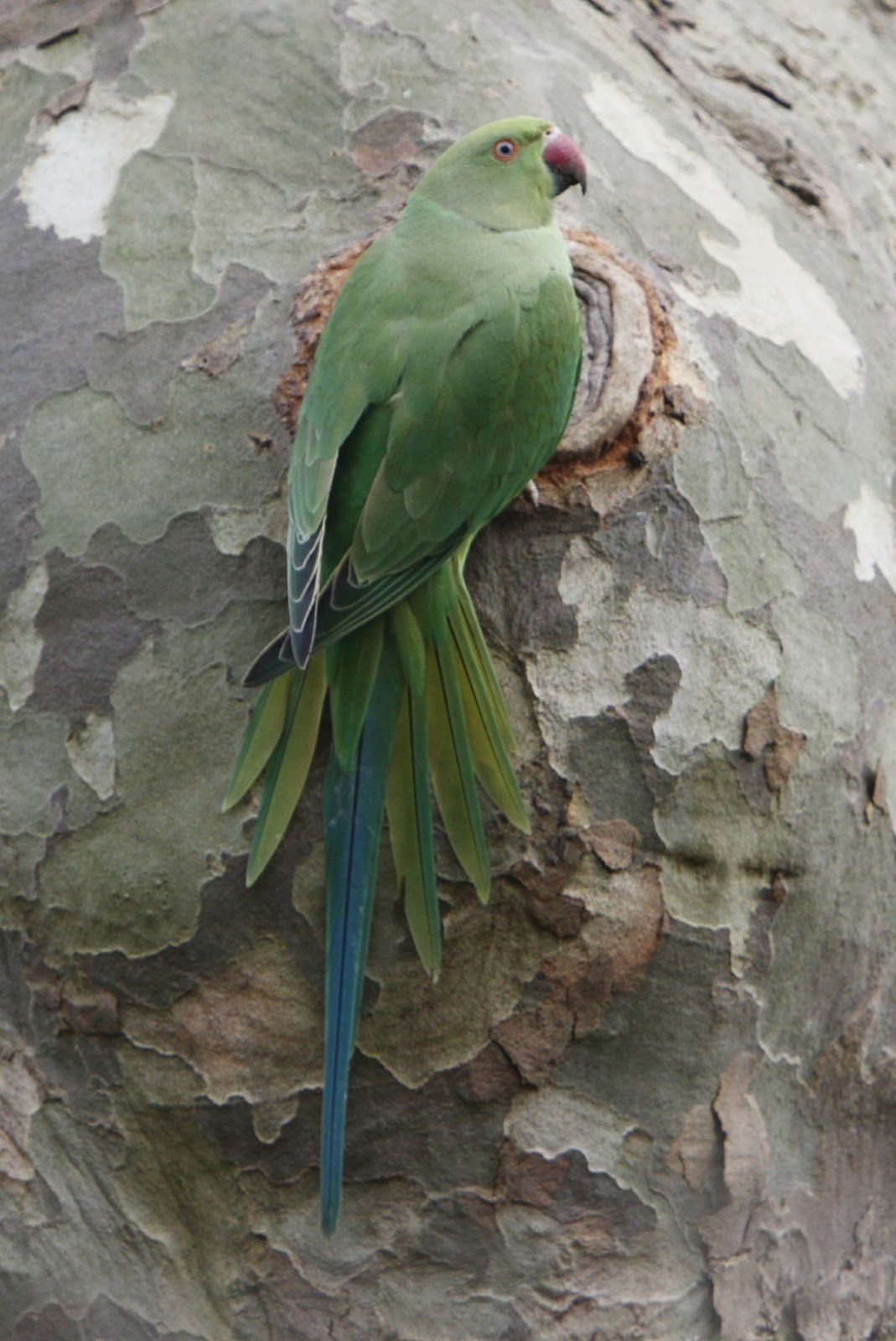
A grey , morning visit to Kelsey Park in Beckenham , found the Nuthatch pair 'mudding up' the entrance to their nest hole . At one visit , one of the birds went in , and seconds later , a Rose-ringed
Parakeet clamped itself onto the entrance , then proceeded to attempt to enlarge the hole with it's
strong bill . As it did so 'her indoors' sat a metre away watching , and no doubt giving advice . After several minutes , I became worried about the Nuthatch trapped inside , and with clapping making no difference , I shook one of the bushes below the hole and the two RRPs flew off , for how long I do not know . The Nuthatch emerged immediately , and the pair resumed the repairs . If you remember , last year the problem was a Magpie and the previous year , a GSWoodpecker .
Also seen on he visit , at least 5 juvenile Grey Heron , 3 pictured here ,
a pair of Egyptian Geese , where the Beck enters the lake , and several Coot and Moorhen sitting on nests . A quick look up on the Common with things starting to warm up , found at least 4 Chiffchaffs in song and 10+ Brimstone on the wing , including 2 females .
I made another visit to New Hythe , without being caught this time , hoping for a Nightingale , but failing , but did find a Water Vole that dived down and returned to the bank with a reed stem , which
it started to eat , but then froze when a second animal appeared . The second animal slowly
approached , then the two animals squared up to each other  and had a bit of handbags , with the
original animal retreating , leaving it's meal to the intruder . I failed on the Nightingale , but did have two singing Blackcaps near the Treatment Works entrance .
A visit to the Adder site overlooking the M25 produced this Bloody-nosed Beetle / Trimarcha tenebricosa , so called as when threatened , exudes deep red blood from it's mouth and various joints , to warn off it's attacker . I also doubled my Adder sightings to four males .
An afternoon visit to Hutchinson's Bank , just over the border in Surrey , produced 10 Peacock , 6 Brimstone , 7 Small Tortoiseshell and a Speckled Wood , my first non-over wintering butterfly of the year .


A second juvenile Adder , born last Autumn was found on one visit to the Greensand Ridge , along
with several males , one pictured , and the odd female is also showing up . A subsequent visit this
afternoon found things have moved on somewhat , with this male , above , already in breeding colours , guarding a female . Only time will tell if he will succeed in mating with her , when other males realise she is around .


Tuesday, 25 March 2014

Tuesday 25th. March 2014

A damp , cool day today at least gave time to catch up on photographs taken over the last few trips out , and to post some of them . The warmth of last week brought more Adders out from their Winter hibernation . I have still only found males , but I have heard of at least one female showing .  Four
males here looked like they had been flattened by a steam roller , but when I passed them later
 on , three of them were charging around as if a female was in the area . A
 
 quick check didn't find one , but that's not saying that there wasn't one around .
 
Once Carol puts out the bird food first thing , anything up to 8/9 Jackdaws swoop down , bullying the other species . They do look smart in their breeding plumage . 
 
Another early morning search for Brown Hares failed again . All that was found was this Rabbit /Meerkat . 
 
Another Adder site almost overlooking the M25 , produced just two males . This one was happy for me to take shots , but swiftly made off when two joggers approached . The sun was out but a very
cool wind blew across the site , so I wasn't expecting to find this Sm .Tortoiseshell sunning itself . On site , I also had my first singing Blackcap of the year .
 
Found my first Bluebells of the year in flower , beaten this year by Warren/Pittswood Birds . 
 
Also found , lots of Cuckoo Flower / Ladies Smock / Cardamine pratensis , a member of the Cabbage family . Hopefully the Orange Tip butterflies who use it as one of the plants they lay eggs on , will follow soon . 
A stop whilst passing at Bough Beech Reservoir found very little on the water , but around the Visitor
Centre , what seems to be a growing colony of House Sparrows were very vocal . Whilst photographing them , the head of a Weasel popped out of a woodpile , and popped back in as quickly . I backed off and waited for it to show again . Half an hour later I gave up , chilled to the bone .
 
Having failed to see a Brambling last Winter , this one was going the same , until , whilst having breakfast this morning , I saw a white rump fly off from below the feeders . A wait at the back bedroom window proved successful , when the bird returned with the other Finches a while later . Unfortunately the shot was through double glazing and drizzle .

Thursday, 20 March 2014

Thursday 20th. March 2014

I would like to take this opportunity to answer a comment made on my
 
last post regarding the advisability of hedgelaying , given the early
 
Spring with birds already nesting , having mentioned finding nests on
 
the post .
 
We three hedgelayers involved , are also avid wildlife enthusiasts and
 
conservators , putting in many hours each week to create habitat ,
 
surveying and doing general wildlife enhancing management , and
 
would not even think about destroying what we work towards .
 
To the commenter , and to anyone else worried about the situation ,
 
I can confirm that the full length of the hedge , which is only just
 
coming into leaf , was meticulously inspected by one of the layers
 
in the afternoon of the day before we started laying , and needless
 
to say , no nests or signs of nesting were found . If any had been
 
found , the hedge would not have been touched , and we would
 
have returned in the Autumn to do the job .