Friday, 20 July 2012

Friday 20th. July 2012

Between things to do and the weather , the last two days have been a case of getting out when possible , but not too far , so the local Commons fitted the situation nicely . Still waiting for real butterfly weather , which hopefully arrives on Sunday , the day Kent BC are coming to High Elms for their visit , hedgerows and Bramble patches seemed to hold most of the interest . I started off yesterday looking for Purple Hairstreaks , but the weather soon put an end to that , but in the glade ,
my first Small Copper for quite some time , albeit passed it's sell by date , nectaring on Ragwort . Moving on to the other Common , a Bramble patch had me scratching my head , when I found some
small green Cricket type insects , with a bold black dorsal line . This was obviously a male , but even when I found a female , identified by the rather lethal looking ovipositor , I still wasn't sure what I
had been looking at . My insect field guide was no help , but on Googling 'green cricket with black marking , it became apparent that they were juvenile Coneheads , of which there are two species , Long-winged and Short-winged . As they were not fully grown , they didn't sport wings , so identity was down to ovipositors . The S-w species has an ovipositor that curves upwards , and the L-w species has a straight one , so the puzzle was solved . Strange thing was that I looked at lots of
Bramble bushes in the area , and just the one had this species on it . The same bush had both male
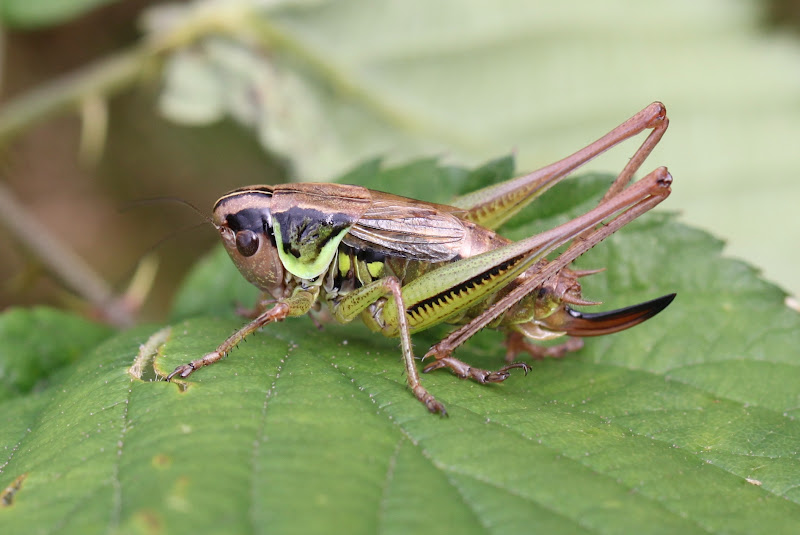
and female Roesel's Bush-criket , and both were willing to pose in the open , and in one of the few sunny spells . Only other interest found was a Nursery Web Spider that was guarding her newly
hatched young .
This morning , before the sun got blotted out by the cloud , I tried again for the PHs , in the glade with the Ash tree . I was just about to give up on any shots , although I did see 3/4 specimens up high . Then , the tell tale zig-zag flight of a Hairstreak crossed the glade and landed on some Bracken
on the other side . It was very twitchy , constantly on the move , and always with wings closed . It
flew a few times , but I managed to follow it , and eventually it opened it's wings , but the light was in the wrong direction , and the topwings looked a dull brown . A few frustrating minutes passed , a few
more moves , and finally with the light in the right direction , the reason the species gets it's name . A few seconds later it was gone , and this time I didn't see where it went . On one of the stands of
Bracken , another Crab Spider , yellow this time , but once again I can see it going hungry . It was then back to the Bramble bushes , where a chance to get male and female Speckled Bush-cricket in
 the same frame presented itself . The ovipositor of this species being scimitar shaped . The Brambles
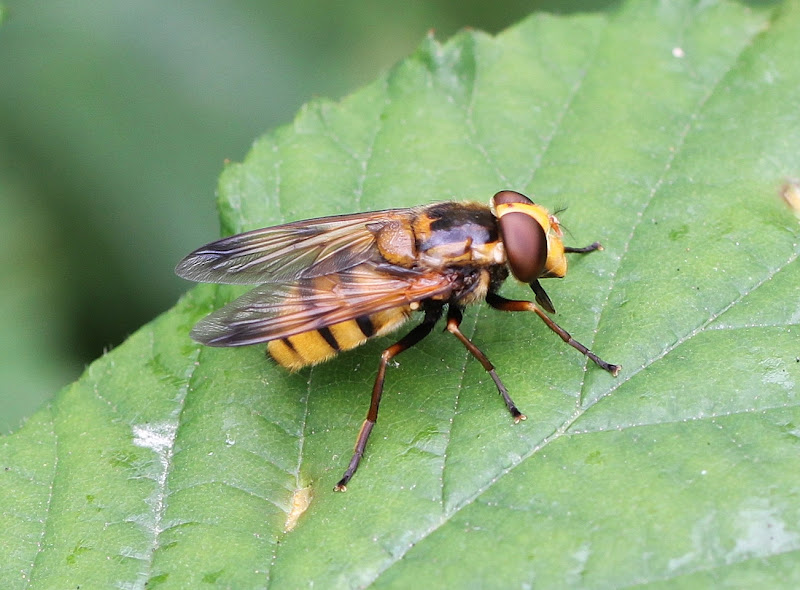
 also produced one of the largest hoverflies , Volucella inanis . A pair of Chiffchaffs were not happy that I was around , and one was carrying food , so probably had a nest close by . The other one
scolded me from above , so I moved off quickly , and things quietened down again . On the way back
to the car , a Common Darter was posed on another Bramble bush , showing nicely the light coloured stripes on the legs which separates it from the all black legged Ruddy Darter . During a walk down
the garden in a bright spell this afternoon , a strange beetle caught my eye . This time the book worked , identifying it as a weevil , Otiorhynchus clavipes .
And finally , exactly one week after queueing 45 minutes to get over the Dartford Crossing , I have read that both the tunnel and bridge have both been paid for many years ago , and that the pair take
£1.25M every week . If a reasonable alternative was available then one could choose whether or not to queue , but there isn't , so continuous Governments just keep raking in the tolls .

Wednesday, 18 July 2012

Wednesday 18th. July 2012

Following on from yesterday's post , the 3rd. and 4th. site visited , both up on the Downs proved to be quite productive . Starting with the reptiles , the combined numbers for both sites were , 52 Slow
Worms , just four here , but 7/8 were found huddled together , 6 Adders , that number consisting of
2 females ,
2 males ,
and 2 juveniles , both probably born about this time last year , and good to see they have made it through their first year . Not a sign of a Grass Snake . The ground vegetation is very lush with all the rain we have been getting , so many more specimens probably went unnoticed amongst it . The wild
flowers are also doing very well , with the likes of Vervain / Verbena officinalis , one of my
favourites coming into flower , as well as Sainfoin / Onobrychis viciifolia , a member of the Pea family , looking at it's best just now . The Small Scabious , posted previously , has now been followed by it's larger relation Field Scabious / Knautia arvensis , both members of the Teasel
family , the larger species lacking the 'halo' that is sported by the smaller one . With Summer still to
arrive , the 'A' word , in the form of Autumn Gentian / Gentianella amarella is already in bud and will
be in flower soon . In the insect world , I came across quite a few Violet Ground Beetles / Carabus violaceus , and I must admit , I was pleased to see on Rob's / The Living Isle , post last night , that he
had identified this fly that I had also photographed because it looked strange as Sicus ferrugineus , which certainly saved me a lot of time digging , cheers Rob . Butterfly numbers improved dramatically on the two sites , most probably because they were more sheltered than the first two .
Meadow Browns as expected topped the list with 93 , but after a poor start earlier , Chalkhill Blues
came second with 72 , though most were sheltering down in the grass like this one . All but one were males , the single , pristine female was being chased wherever she went , and consequently I didn't manage to get a shot of her . Ringlet 52 , Marbled White 23 was the best number I've seen so far this
season , including another individual suffering from mites . Large White 2 , Small White 2 ,Small
Heath 8 , Small Skipper 18 , Large Skipper 1 , Gatekeeper 1 , and a particularly rustic looking Comma made up the full list . Two Foxes were seen , but both moved off before the camera could be lifted , as did two freshly emerged Common Darter dragonflies .
The delivery I was waiting for arrived just before lunch , but by then the wind was really strong , the sky grey , with showers arriving on a regular basis , and that was how it stayed .

Tuesday, 17 July 2012

Tuesday 17th. July 2012

A busy day , visiting four sites and finding quite a bit of interest , so two sites tonight on picture and comment format , the other two I'll post tomorrow , As I will be tied to the house awaiting a delivery .
First stop was the Ash tree up on the Common , still no Purple Hairstreaks coming down onto the
vegetation , this male fed and sunbathed in view , but too high up .
Whites , like this Green-veined , have been few and far between this Summer .
This Crab Spider would find it's breakfast easier if it moved onto an Ox-eye Daisy or other white flower .
Amongst all the long grass , a little patch of Hairy Tare / Vicia hirsuta , a member of the Pea family , with it's delicate , small flowers .
Second site was on the Downs , managed by Butterfly Conservation , specifically for the Chalkhill Blue butterfly . It was very quiet and cool on arrival with just a few Meadow Browns seen .
This Ringlet didn't look happy , nor would I with several mites attached to my head .
Cool yes , but I wasn't expecting to photograph Waxcaps , Scarlet Hood / Hygrocybe coccinea .
Autumn Gentians are well advanced but not yet in flower , but a relations , Yellow-wort /Blackstonia
perfoliata , and the pink Common Centaury / Centaunum erythraea , are well in flower .
As is the aromatic Marjoram / Origanum vulgare , a member of the Labiate family .
The wet weather was definitely to the liking of the Roman Snails , which were seen all over .
Some flowers have already gone to seed , like the brown pods of Birdsfoot Trefoil and the green , horseshoe shaped pods of Horseshoe vetch .
Just about to leave the site , when I found a male Chalkhill Blue that had only just emerged , and was
pleased to get some warmth from my finger . Absolutely pristine , with one wing still not yet fully
 inflated . It was the only one I found on the whole site , so I left him to wait for others to emerge .

Monday, 16 July 2012

Monday 16th. July 2012

Got out yesterday , but didn't have time to post , so catching up in the rain today . With Kent BC coming next Sunday for their visit , I decided to head for High Elms to see if any of the Silver-washed Frilillaries , White Admirals or White-letter Hairstreaks had managed to emerge during the week while I was away . On the way , and to give High Elms a chance to warm up , I stopped off at all three Purple Hairstreak sites on the Commons to see if they were showing . One of the two on West Wickham Common did have a couple of PHs , high up on an Oak , but the other site , where I have photographed them in the early morning in past years , didn't produce a single sighting . Whilst
waiting , I was rewarded with my first two Gatekeepers of the year , both males , identified by the
dark sex brands on the upper forewing , and as a species on the underwing by the white spots on the under hindwing . The sunshine was starting to produce some movement , and the male Large Skipper
on the right seemed to have a bit more on his mind , but the female unfortunately flew off quite unimpressed . The Brambles were also alive with Crickets and Grasshoppers of all sizes :
Meadow Grasshopper ,
Roesel's Bush-cricket , this a female , with upcurved ovipositor ,
Field Grasshopper ,
And Speckled Bush-cricket .
The Ash tree on Hayes Common also produced 3 PHs , but they too were high up out of camera range . The only other interest found was Red Bartsia /Odontites verna , a common relation of the
much rarer Yellow that I was lucky enough to see at Ditton Quarry , thanks to Mike .
It was still cool when I arrived at High Elms , and that was reflected on the butterflies seen , almost none , as I made my way to Burnt Gorse . That produced a few Large and Small Skippers , Ringlets and Meadow Browns , and at least they are doing their best to ensure butterflies for next year . This
was one of two mating pairs recorded , the female with her wings open . Just before leaving Burnt
Gorse , a sigh of relief , as I found my first SWF of the year , a male , nectaring on Red Clover , but not willing to be approached closely , and a second that was just a fly by . Only other interest found
was a specimen of White Mullein / Verbascum lychnitis , found right down the far end . . The small glade beyond the gate , where the female SWFs lay their eggs produced a single Large White , but very little else . The other small glade , heading for the Orchid Bank , produced Keith , with whom I made the trips for Large Blue and Swallowtail earlier in the year . He had been photographing a White Admiral , which I just saw as it soared high into the trees . He had also had a couple of female SWFs down earlier , so things were looking up . A blanket of cloud then masked the sun , so we decided to try for WLHs in the lower glade , stopping for a look at the Yellow Birdsnest on the way . 300 was the last number I
had heard for this rare plant , but today we put a conservative estimate of 1,000 on the plants we saw , and there still seem to be new plants emerging . The lower glade produced another male SWF , this one having one wing that hadnlt inflated fully , but he seemed to be flying OK , so hopefully he will find a mate . The Canadian Golden-rod , on which the WLHs were nectaring last year , is still in tight bud , hopefully it will open before the weekend and attract any WLHs that will have emerged . We headed back to check the glade where I had found Keith , and when the sun finally emerged again , a
female SWF dropped out of the trees to nectar on Self-heal , showing perfectly how the species gets it's name from the silver-washed underwing . She then spent some time , just soaking up the rays and
showing her topwing , duller in colour and lacking the dark sex brands of the male . With more cloud than sunshine , and with us both expected home , the final find of a very blue coloured dragonfly ,
much bluer than the shot shows , flying very slowly around the glade , and only too happy to pose on Keith's finger . I must admit that I was hoping for a rare migrant species , but with books out at home , can only make it an immature Southern Hawker , the blue markings usually being very drab , and when an adult , will be green , apart from the last three at the end of the abdomen , which will be
blue . Oh , and if you ever wondered what a dragonfly looked like when it was smiling !
Good job I didn't leave the visit till today , it's hardly stopped raining all day .