Monday, 3 August 2015

Monday 3rd. August 2015

Another catch up on a busy week's outings .  
Still just the one Chalkhill Blue male on the slope below Biggin Hill Airport , but the visit did find a
Roe buck , the first I've seen on the site , and as can be seen , so close to a busy road .
On an umbellifer , the parasitic wasp  Ichneumon suspiciosus ,
and lots of one of the more easily recognised members of the Hawksbeard family , Beaked Hawksbeard  / Crepis vesicaria , identified by the orange underside to the outer florets .
After a windy and cloudy day , the sun came out late afternoon and I headed up for a look around West Wickham Common , hoping for Purple Hairstreak . That didn't work out , but over on the heathland clearing , 10/15 Holly Blue were making the most of the conditions . One female was
 particularly well marked , And whilst watching her , I was very surprised when she oviposited on
the young shot of the Heather . Being second brood , the books say their eggs are layed on Ivy . Although I have seen them laying on Dogwood and Gorse , this was a first for me . When she moved
on , I found her egg , tucked into the yet to open flower buds . I have marked the spot and hope to see the caterpillar when the egg hatches .
Only other interest found was this Small Magpie moth . 
A mid-week visit to the Isle of Sheppey , for a change of scenery as much as anything , turned out to be rather disappointing . Starting at Elmley , the track to the car park produced Grey Heron , Coot and a single Lapwing , before sighting my only Yellow Wagtail , or any other migrant , just before

 the car park . A distant Brown Hare , hunkered down in a strong wind was the only other interest found . The return trip down the track was only improved by a distant Marsh Harrier , but right at the
end , a Little Owl was seen on one of the barns . My arrival at Leysdown coincided with high tide , but there weren't any 'specials' in the gull roost on the pitch and putt area . The only waders seen were
Turnstones , this one having a seaside paddle . Things were so quiet , I turned around before the track to Shellness and headed for Capel Fleet . Any chances of finding a goodie were squashed by a mechanical shovel cleaning out the roadside ditch and a bulldozer spreading the diggings over the adjacent field . Strange timing , as on my way back saw a Little Grebe pair with very young chicks on
the Fleet . A female Marsh Harrier was seen at the raptor viewpoint , but that was it . To finish the day off , the traffic was a nightmare around the Maidstone area on the way home .
The High Elms butterfly transect produced 17 species , with all species falling in number apart from the Silver-washed Fritillary and the Large White , but the star of the show was the White-letter Hairstreak , which reached the heady height of 10 in the bottom glade . They were difficult to get a positive number in the windy conditions , but fortunately , Alison and Terry , both ex HE Rangers , and another enthusiast were in the glade , and between us were able to get the positive figure , the best for many years for the site . The WLH are now nectaring on the Hemp Agrimony as well as the
Canadian Golden Rod .
An early morning visit to West Wickham Common finally got a Purple Hairstreak into the
viewfinder . Another species having a poor year locally , as my maximum count on WWC to date is 5 and just 6/8 on Hayes Common . Also found on the visit was a yellow and black , wasp type , flat
bodied insect , the pattern of which I hadn't seen before . My thought was Hoverfly , but looking on the web , I couldn't find anything like it , so I put it on ISpot , and within minutes , one of the regular contributors , Chris , put me out of my misery . It is in fact a Soldier Fly with the common name of Banded General / Stratiomys potamida . Apparently there are four large , colourful Soldier Flies , this being one of them .
On Saturday , Keith and I decided to have a look for the Southern Migrant Hawker in Essex . We couldn't get away before 11.30 , and then got into a 3 mile 'stop-start' queue approaching the Dartford Tunnel , that wasn't on Keith's satnav when we left , but appeared when we got on the end of it and couldn't do anything about it . Anyway , we finally reached the Wat Tyler Country Park just after 13.00 , and the place was heaving . I've never seen so many people in a Country Park in my life and there was a wedding going on in a barn as well . Having parked up , we headed to the lesser
populated areas and started looking , Keith coming up very soon with a female Wall which was a surprise . We had seen a few photographers en route to the car park , so headed towards that area . The first one we talked to said we ' should have been here at 11.00 ' and showed some great shots of the Hawker perched low on reeds . Undeterred , we carried on searching , but the wind was quite strong . Eventually , we got our first sighting , in flight , right next to the play area , and later it
perched briefly in the same area . We spent the rest of the afternoon attempting to get in flight shots but to no avail and the warmth was discouraging any further perching , but we had seen the Hawker and got a few shots . On the way out , we stopped where three photographers were looking high in a
tree , they had watched a male fly and perch 5/6 metres up . We managed a few more shots , but nothing compared to some we have seen on the web . Thankfully the journey home was uneventful .
Yesterday I met up with Martin on Hutchinsons Bank and had a look around . He had a Clouded Yellow in the week and also a second brood Dingy Skipper . I was satisfied with 4/5 second brood
 
Small Blue , and when Martin mentioned that he had seen Chalkhill Blue ovipositing on Horseshoe
Vetch recently , we had a look and found one of her eggs .
And finally , before meeting up with Martin , I had distant views of a large bird , which quickly spiralled into the sky , most of the time into the sun from where I was , until it was out of view . I only had the 100mm. Macro on the camera , but took a few shots , best of which is here . I have
shown it to a couple of people , but would be pleased with any thoughts . 


Sunday, 26 July 2015

Sunday 26th. July 2015

A very windy visit to the slope below Biggin Hill Airport produced my first Chalkhill Blue of the
year , a freshly emerged male , hanging on for dear life on an umbellifer . The few other butterflies
around , like this Large White , were also making themselves as small as possible to resist being blown off their perch . The visit also produced a close up of the day flying moth Oncocera
semirubella that seemed pleased to get some warmth from my finger , but sadly no sign of either Clouded Yellow or Dark Green Fritillary , both seen on site last year . On the way home , I stopped off for a look at Salt Box Hill , a SSSI managed by London Wildlife Trust , having heard that the ponies and goats had been removed . The latter proved true , but only to the other fenced off area to the left of the steps down , and the probable cause was the SSSI being treated with chemicals ( ragging ) to control the scrub which is once again invading the area . To my knowledge , this will be the 5th. attempt to get the area to it's SSSI citation of being a 'chalk grassland ' , as at the moment it resembles no more than a field , mostly covered in scrub and weeds . Butterflies were at a premium , with just 10/15 Marbled White ( I have recorded 250+ on site in the past before grazing was introduced ) and a few Meadow Brown and Gatekeeper being recorded . The highlight for me was
another White Pyramidal Orchid , the third specimen I have seen and photographed this year , having never seeing one previously . Much more common were Bittersweet , Common Cleavers , Weld
( pictured ) and Plantains , all species of waste and scrubby areas , along with plenty of regenerating trees and scrub which seemed to have missed the ' rag ' .
Another windy visit was to New Hythe , the patch of Phil / Sharp by Nature . I hadn't visited since the Spring , when the scar and loss of habitat caused by a new pipeline being layed across the site was a real shock . Although the pipeline has been completed and ' remedial work ' done , unfortunately the habitat , especially that which was favoured by several Nightingale pairs will take years to recover , if ever . Whilst searching for Odonata on Abbeymead lake , my phone rang and it was Phil , who had seen my car in the car park . We met up and spent the rest of the morning catching up and having a good look around . The river was down , but a fly-by Kingfisher and an Oystercatcher were the only highlights from the ' bucket seat ' . As we passed between Brooklands and Abbeymead , Phill picked up Tern calls but we couldn't get a clear view , but later what appeared to be a family group showed
up again and a juvenile Common Tern made it into the viewfinder . The wind didn't help with the Odonata , but several Brown and Southern Hawker were seen , but most numerous species of
dragonfly was the Emperor , mostly in flight , but also a couple of ovipositing females . As we passed
the end of the Railway lake , Phil spotted this female Brown Hawker , busily ovipositing , before bing chased off by Black-tailed Skimmers . No sign of Water Vole in their favoured ditch , and returning to the car park along the Millstream , we searched for Sm. Red-eyed Damselfly , but once again the wind didn't do us any favours to be sure of their ID , with their larger relations occupying the same areas . Just before reaching the car park , a first of the year for me , the 'purring' of a Turtle Dove , which I also managed to get a brief glimpse as it flew off . We went our separate ways from the car park , me to White Hill above Shoreham , the Kent BC site managed specifically for the Chalkhill Blue , which I heard were on the wing from fellow enthusiast Keith . Once again , the wind made things difficult , along with the 12 or so males constantly charging around searching for females .
 
 Fortunately , the odd cloud passed over , enabling a few shots of the males at rest . No sign of any females having emerged yet on site .
 
On the way home , a stop near Lullingstone found the Green-flowered Helleborines in flower bud , but yet to open . Interestingly , this species has the ability to self-fertilise , sometimes in the unopened flower . 
As mentioned in the previous post , the White-letter Hairstreaks posed superbly for the Kent BC members last Sunday , but I didn't have a camera with me , so during the week I returned for a short visit and to get some shots . Four specimens came down to nectar on the Canadian Golden Rod , three
 
were males showing wear and damage from the aerial battles I had seen at the top on the Ash tree for the previous three weeks , but the fourth was a pristine female , larger in size and with longer tails on
the hindwing . Whilst waiting for the WLH to come down , good numbers of 6-spot Burnet moths , 
 
and on the CGRod , a small moth which I believe is a Small Purple Bar . 
 
The other interest seen was this very light coloured female Large Skipper , a species coming towards
 the end of it's flight period . 
On Thursday I did the High Elms transect which produced the best return of the year so far , of 21 species . Having said that , some species were again in low numbers , like just 2 Speckled Wood ( best count has only reached 5 ) , Small Heath - 1 ( the only record this season ) , Holly Blue-1 ( only
 
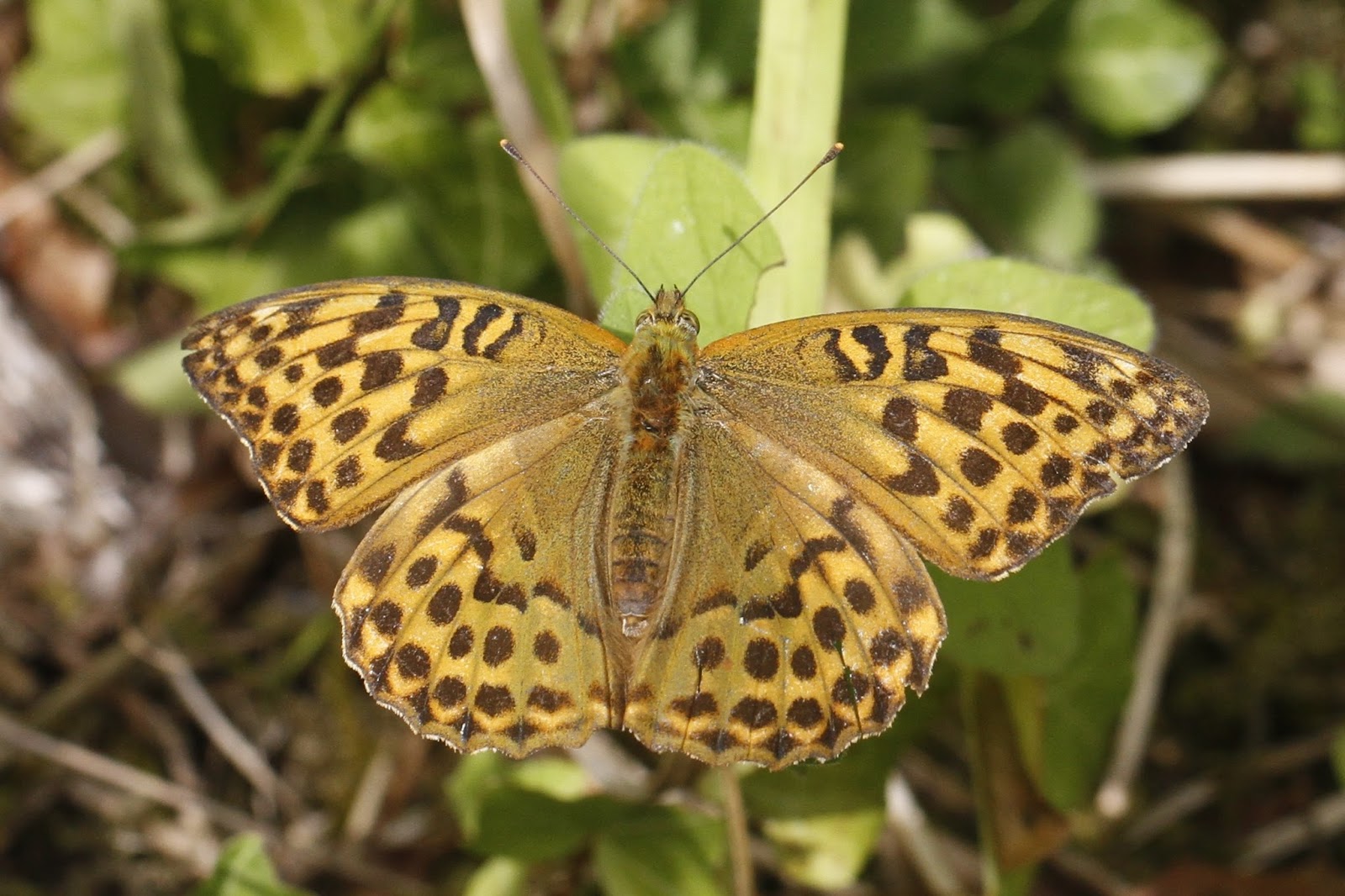
the second record ) , Brown Argus-1- pictured ( only the third record ) . Doing better , but still fewer than in previous years , the Silver-washed Fritillary-19 , but 8 of those recorded were females ( lower
 
picture ) , so hopefully that bodes well for next year , fingers crossed .
Yesterday I helped with the Down House transect , which like High Elms wasn't outstanding , but we did record 15/20 Small Copper , a species I have failed to record at HE at all this year , and two first for the year for the transect , Brown Argus and Silver-washed Fritillary .
And finally , a couple of the more unusual shots I managed to get of the Purple Emperors a week ago
 at High Elms . Pure luck to photographing them on the ground , only for them to take flight , and in
these two shots , leaving their shadows on the ground .

Monday, 20 July 2015

Monday 20th. July 2015

The dull , windy conditions last week somewhat curtailed outings , and several more visits were made to High Elms preparing for yesterday's Kent BC visit . No further Purple Emperor sightings , but the weather was not suitable for the males to come down , and the White-letter Hairstreaks weren't tempted by the now flowering Canadian Golden Rod either . Whilst waiting and hoping in the bottom glade , a few bits of interest were found .
On a grass seed head , several cocoons . I sent this picture to Martin / Martin's Butterflies , who was of the opinion that they were those of a parasite , Ichneumon or something similar . The female parasite would have layed her eggs on or in the host . Having hatched , the larvae concentrate on feeding on the non-essential organs of the host , thus keeping the host alive . Once fully grown , the larvae start on the essential organs of the host and kill it . They then pupate in cocoons like this , the host , now no more than a shrivelled  skin , dropping to the ground . Thanks for that Martin .
This Yellow and Black Longhorn Beetle / Rutpela maculate has been in very short supply this year , usually they are swarming all over the Bramble flowers , but very few seen .

Also on grass seed heads , lots of these tiny Mirid or Capsid bugs , with their 'goulish , smiling face' markings . 
The butterfly transect , snatched one windy afternoon , produced 20 species , the best so far this year , but was still woefully low in individual species numbers , apart from Meadow Brown and a surprising 23 Large White and 28 Small Skipper . Highlights were a first confirmed WLH , high in
the Ash tree , a second White Admiral , showing it had been out for some time , and two very fresh
Common Blue , the first specimens of the second brood seen on site this year , just hoping they will do better than the first brood which was very poor in number .
A few other finds at High Elms included ;
Finally managed to capture a male Gatekeeper , open winged ,
and later found that the females too had emerged .
Somewhat of a rarity on site this year , a Holly Blue . This a female .
Lots of courting Meadow Brown , but caught these two , male on left , taking a breather .
Towards the end of the week , an explosion in emergence of Comma . This one was shy , but on a nearby Buddleia bush a minimum of 12 were recorded , now changing from their early golden topwing colour , to their tawny red hue .
The female Silver-washed Fritillaries are now getting down to the important egg laying . Several seen laying their eggs up to 5 metres up tree trunks , but always with Violets growing underneath for their larvae to feed on .
6-spot Burnet Moths have also emerged , and are not wasting time .
Down in the grass on Burnt Gorse , was this colourful moth , Oncocera semirubella , apparently no common name yet , having migrated over from the continent , and now resident in Southern counties .
1/2 Brown Hawkers have been patrolling the bottom glade , but not perching , but on Saturday , this immature female Southern Hawker was willing to pose , just for a few seconds .
A look in on a very quiet Common , found the Broad-leaved Helleborines just about to burst bud into flower ,
and the strange looking fly Sicus ferrugineus , with it's abdomen curled under , was all I found .
Helping out with the Down House butterfly survey , plenty of 'Hull City supporters' , caterpillars of the Cinnabar moth were found on the Ragwort , their foodplant ,
and it was good to record 3 Small Copper , a species that seems to have declined dramatically locally.
 
Almost at the end of the transect , this striking female Painted Lady was found , nectaring on Purple Loosestrife in the walled garden .
My highlight was putting up two Roe Deer fawns , accidentally , from the long grass as we crossed the large meadow . They bounded in different directions and all I got was a rear end of one as it headed for the edge of the meadow .
Yesterday , 30+ Kent BC members came on the High Elms butterfly walk , in what turned out to be perfect conditions , after the opposite had been forecasted all week . Just 16 species were seen , but more importantly , the SWF put on a great show , 2 White-letter Hairstreak were found nectaring on the Canadian Golden Rod and gave all present plenty of time to get their pictures . White Admiral did let us down , as did Common and Holly Blue , Brown Argus , Red Admiral , Sm.Tortoiseshell , Dark Green Fritillary and especially , the Purple Emperor , but everyone seemed to go away happy with what had been seen and photographed .